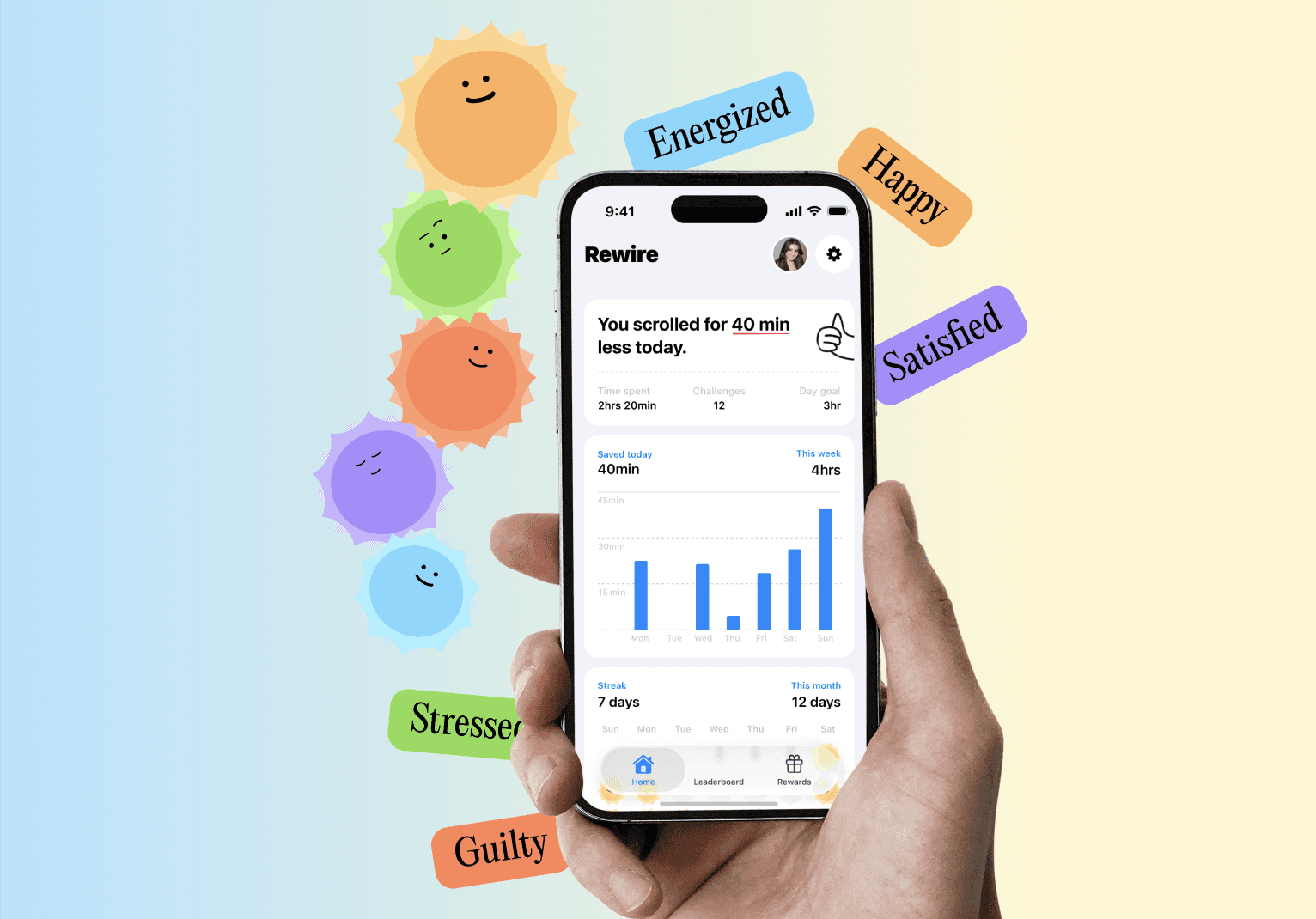
Using design thinking to craft a solution that empowers users to reduce social media dependency
TIMELINE
1 month
MY ROLE
UX Design,
UX Research,
Visual Design
TOOLS
CONTEXT
About the project
Social media addiction has become a growing concern in the digital age. Constant notifications, endless scrolling, and algorithm-driven engagement loops keep users hooked, often leading to anxiety, distraction, and loss of productivity. Young adults spend an average of 3 hours per day on social media, the highest of any age group.
(Source: Gallup Poll, 2023)
→ Together, we explore how to help users regain control of their time and attention.
Research
We interviewed 5 young adults about their relationship with social media.
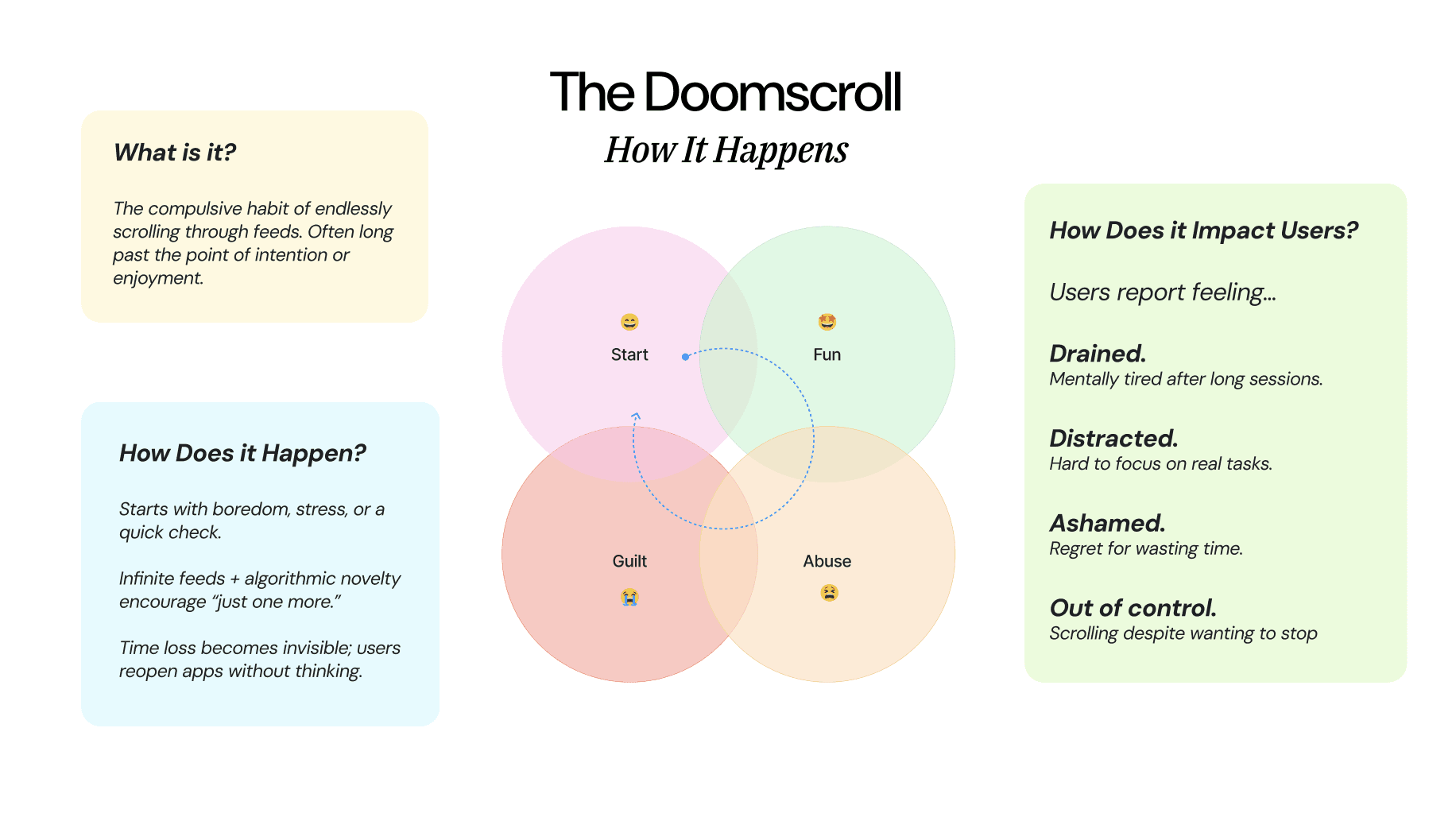
People use social media for different purposes—connection, entertainment, or information—but the same platforms blur these intentions, pulling users into longer sessions than planned.
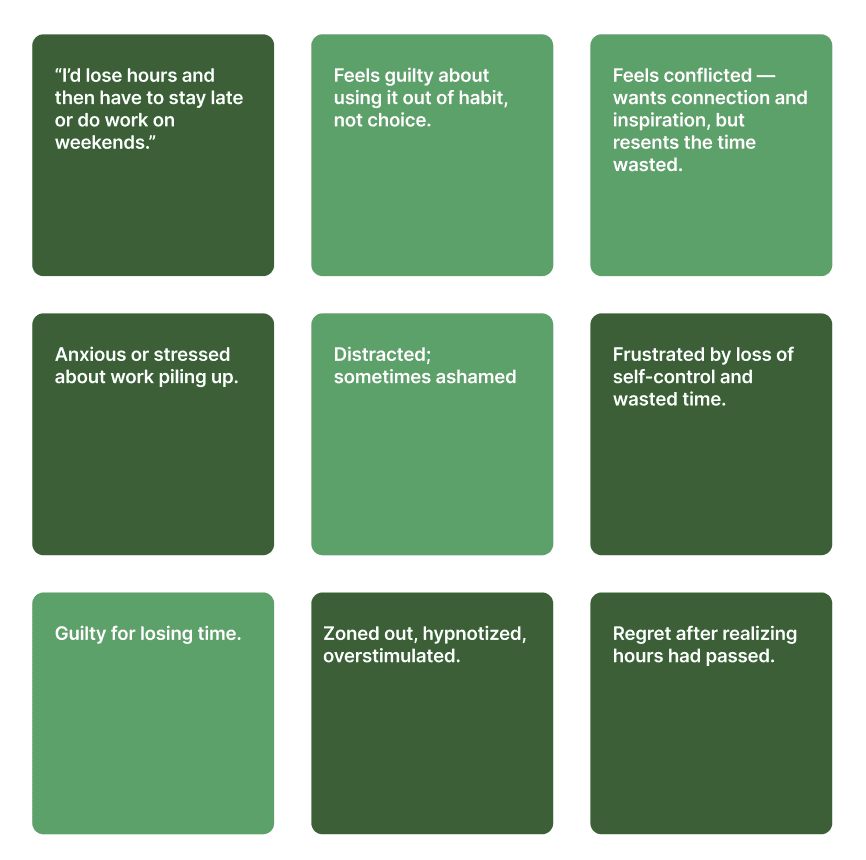
After realizing how much time they’ve lost, users often feel regret guilt, reinforcing a negative emotional loop that affects their well-being.
Even when users set limits or practice awareness, the addictive design of social media and emotional triggers make it difficult to stop scrolling once they start.
Understanding the user
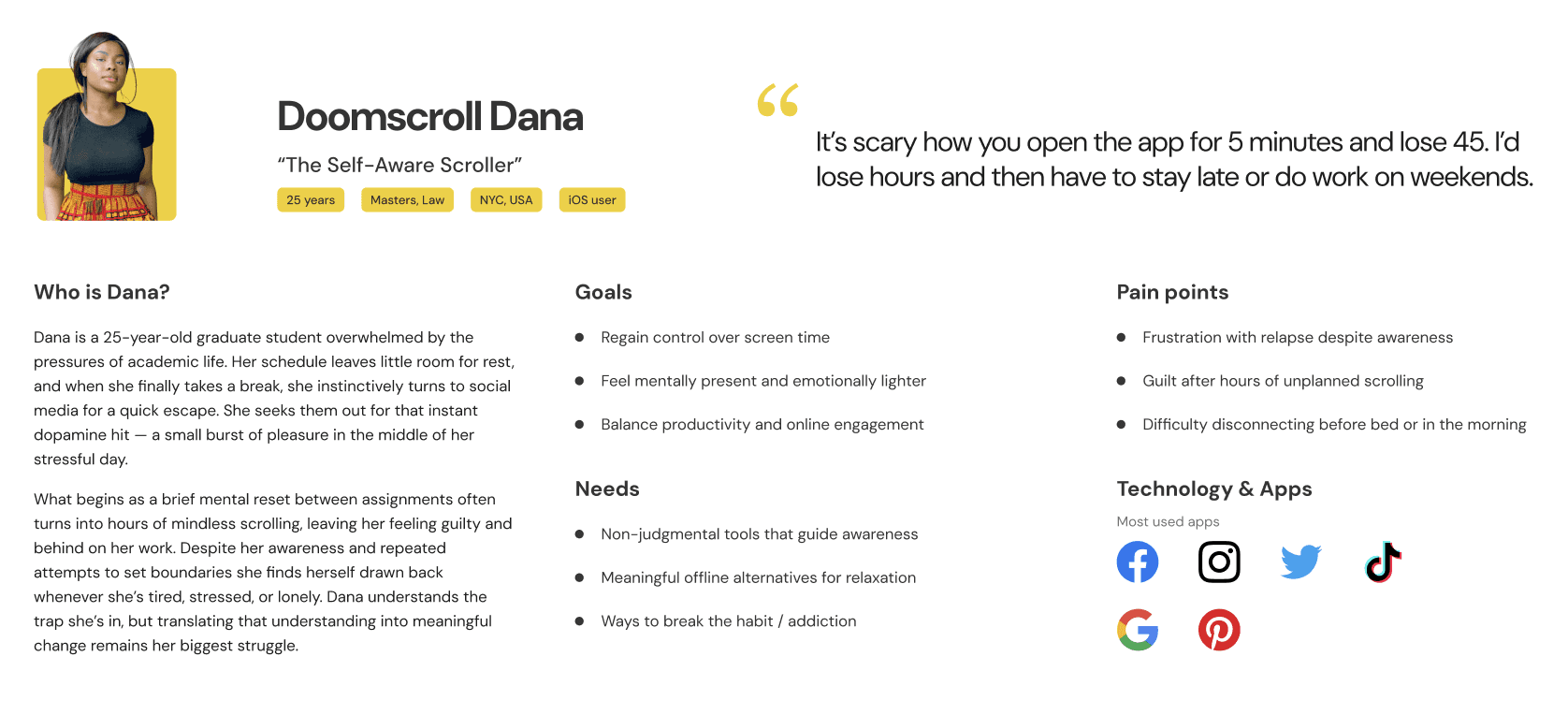
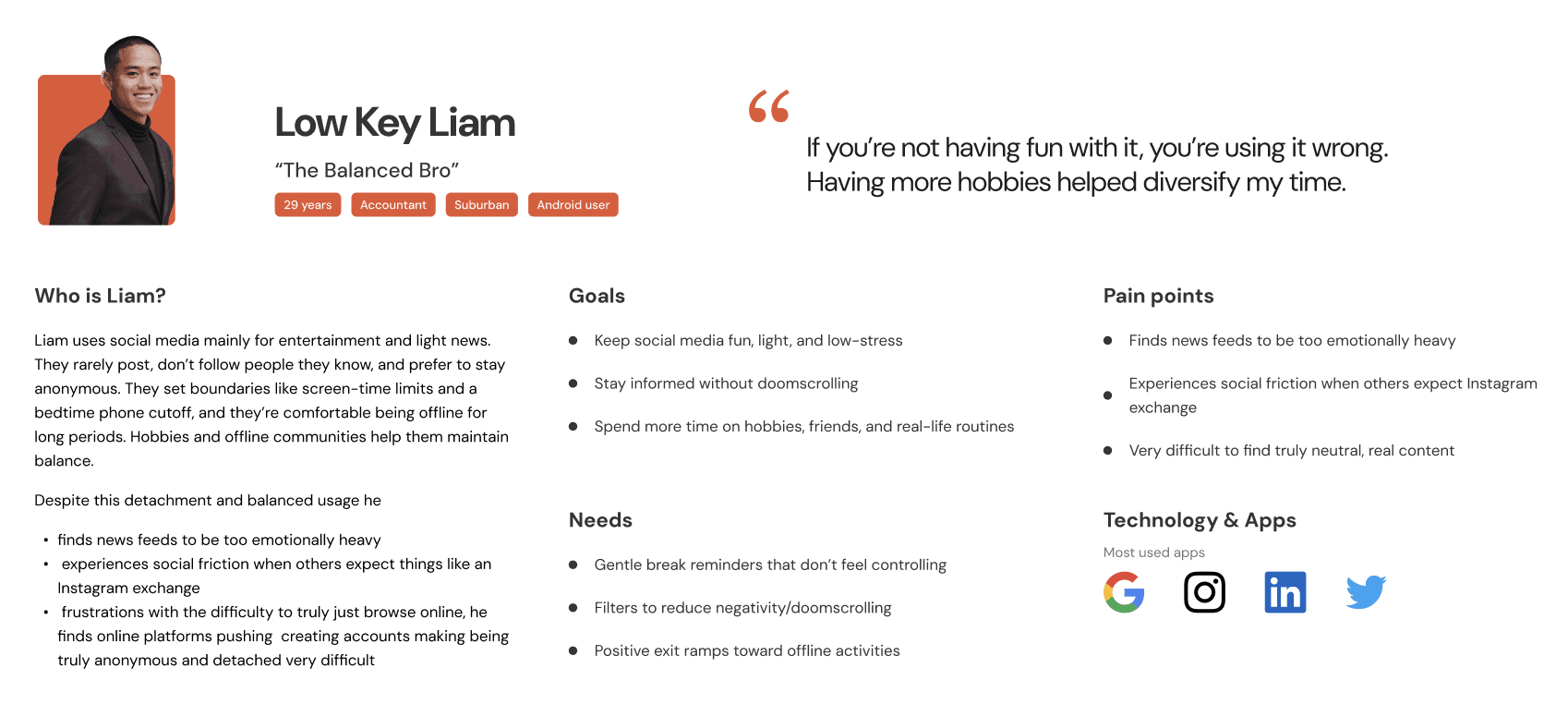
Based on the interview we formed two key main user personas to understand the problem space better.
User stories
As someone who knows these platforms are engineered to hook me, I want gentle interruptions that help me notice when I’ve been scrolling for too long, so I can regain control without feeling guilt or shame.
As someone who feels guilty after losing hours to my feed, I want a way to better understand my patterns and build healthier habits instead of feeling like I'm failing.
As someone who wants social media to stay light, I want to automatically filter out outrage-bait content, so I can scroll without feeling pulled into negativity.
As someone who hates how every feed feels like propaganda or emotional bait, I want to filter out polarizing content, so my scrolling feels neutral, calm, and actually enjoyable.
User journey
Designing for behaviour change
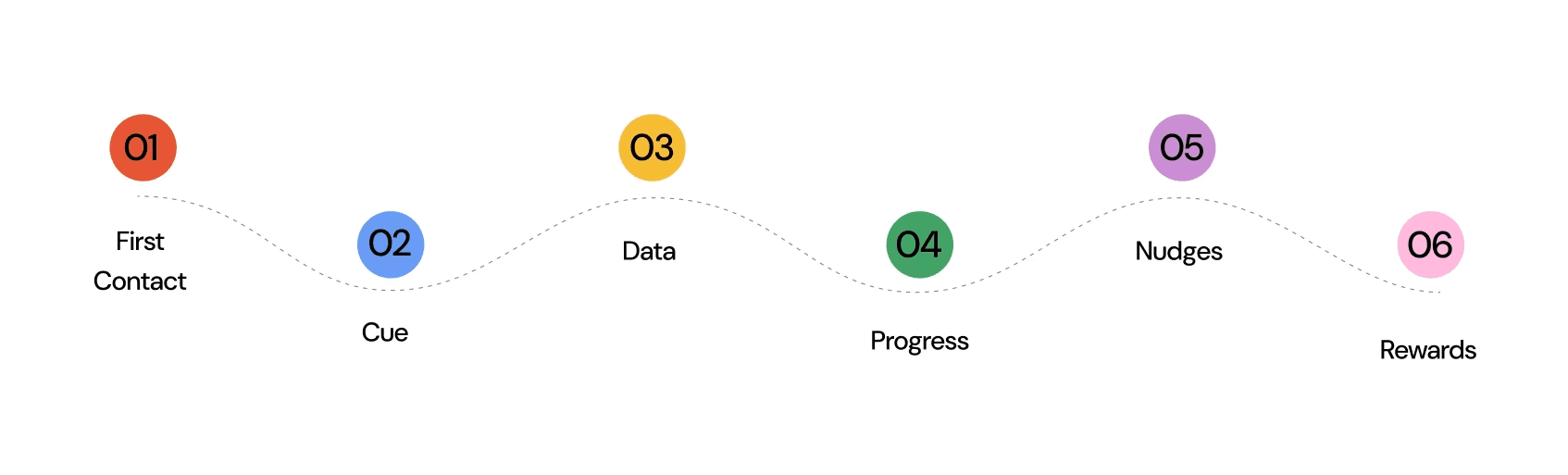
We started by looking at what others in the world of design for behavior change have found in their work. We were introduced to Katie Patrick, a well-known environmental engineer and software designer who focuses on design for behavior change in a climate change context, through Kelley Yu, from our cohort.
Problem Statement
People get stuck scrolling without meaning to. They need help breaking the loop and building healthier habits.
How Might We's
How might we make healthier digital habits feel easier, more rewarding, and more sustainable than the doomscroll?
Brainstorming
Conscious Scrolling
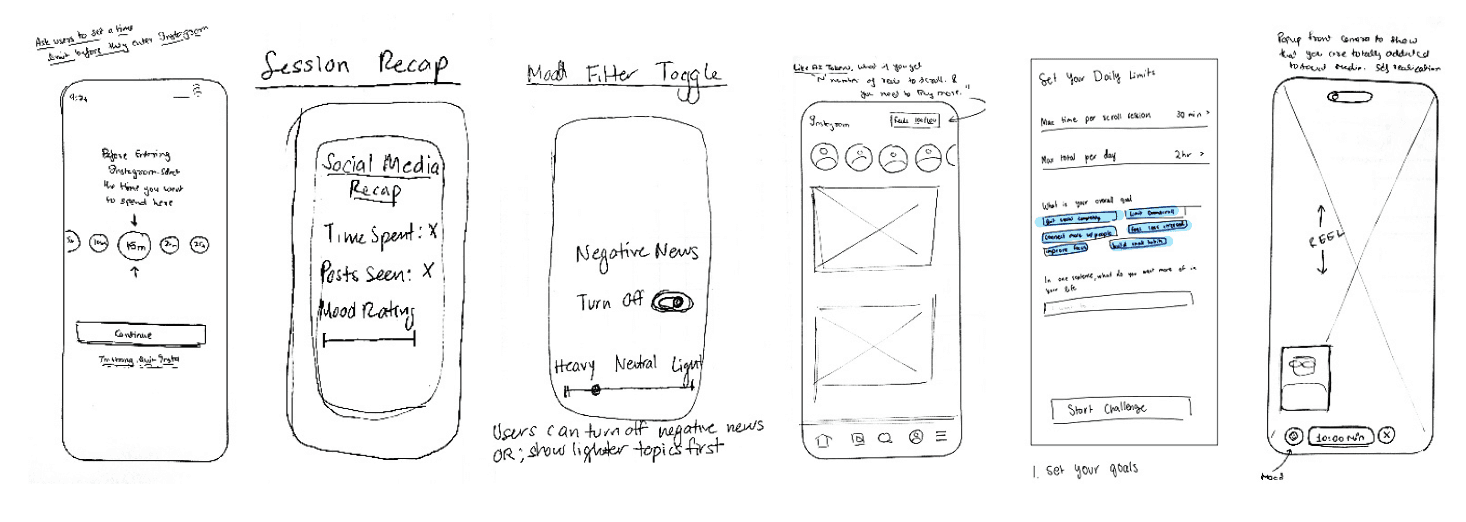
Helping people use social media with intention, not impulse — through ideas like setting time limits before each session, viewing a recap of the last one, using mindful filters and toggles, or flipping the camera to reflect you as the viewer.
Visual Time Limits
Setting time limits through visual, in-app cues like a micro-stopwatch, daily usage goals, contextual timers, and automatic logs of time spent on each platform.
Habits
Habit forming gamification tactics by introducing brand collabs and rewards, using cute cat pictures, offline alternatives to social media.
Barriers
Creating intentional lockouts by asking users why they want to open the app, tracking their responses over time, and forming behavior patterns before granting access.
Design and branding
Character design
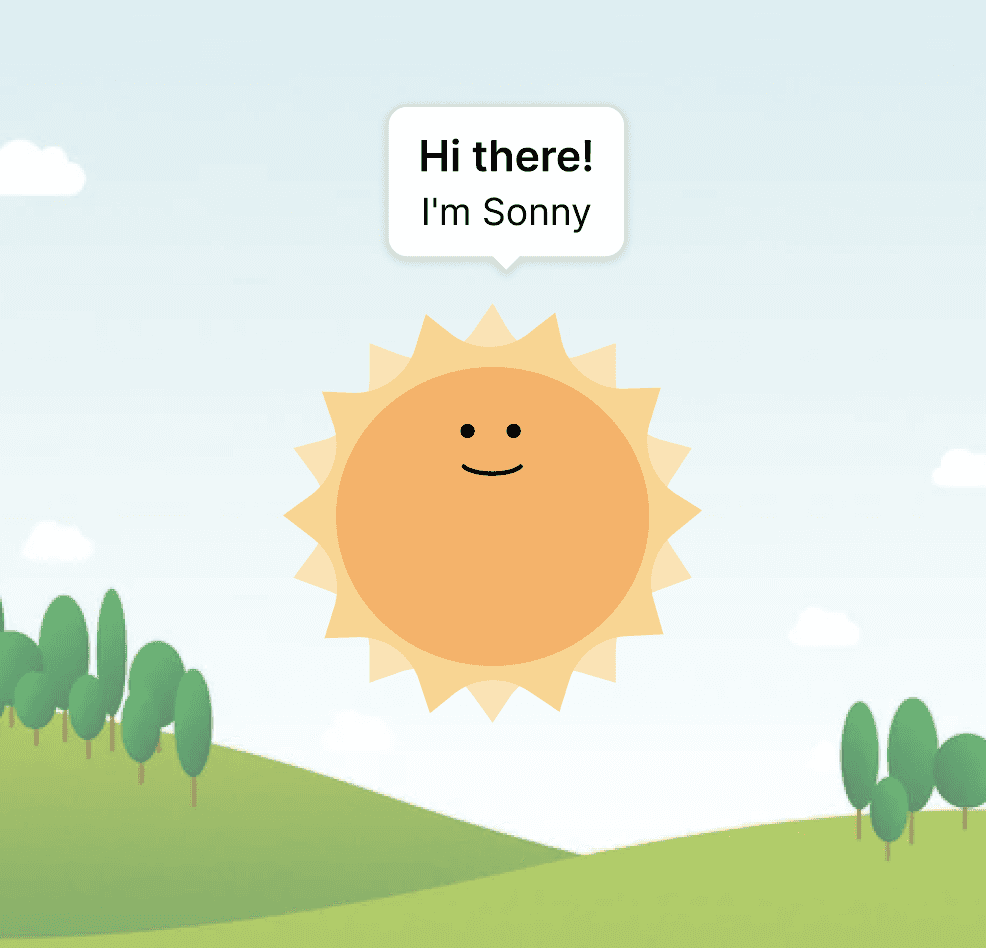
A supportive caricature along for the ride, no matter where the journey takes you!
Style guide
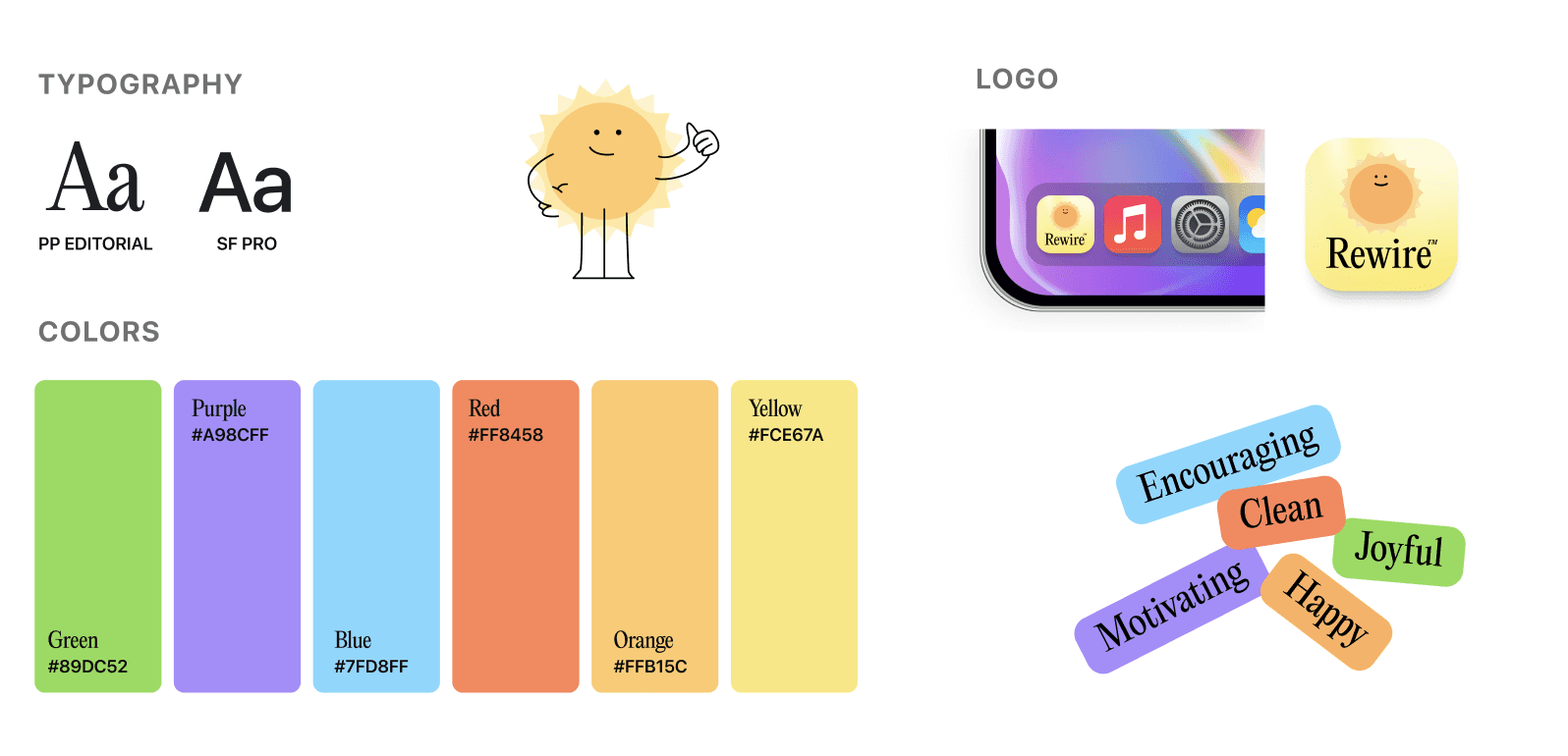
We also learned about the importance of branding through our research, and learned about the impact that the tone of our design choices can have on users. We purposefully kept a clean, motivating, and joyful UI throughout our design.
Solution & Key design decisions
Designed to adapt
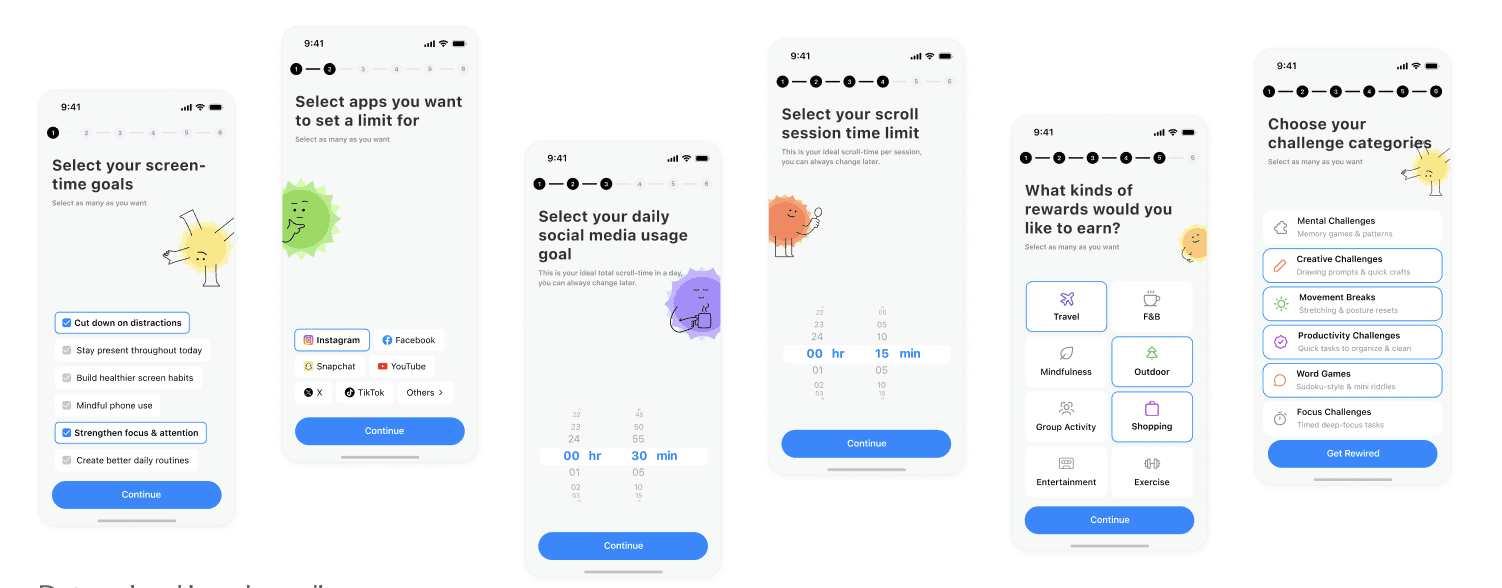
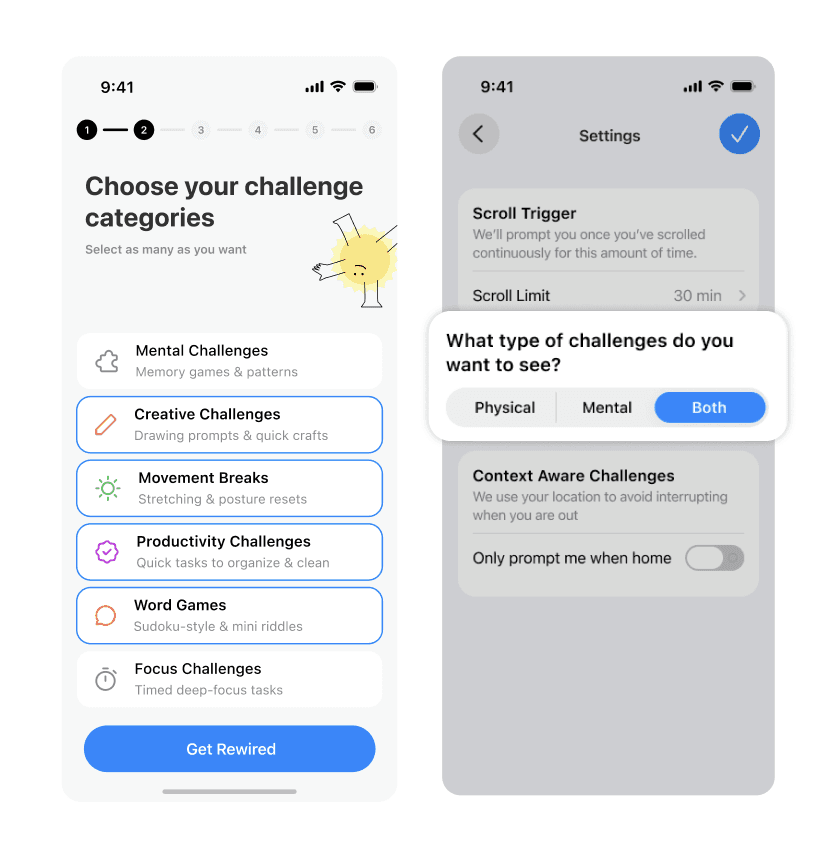
From the get go we have tried to adapt the entire experience for every individual. We realised that people continue to use the app when it fits their needs and it relates to their life. We tried ensuring that every feature is tailored to the users goal and needs - from their screen time goals, the app they want to restrict, their daily goal, total limit, the kind of rewards to even the challenges that excite them.
People engage more when the challenge fits them
We want to make the app sustainable long term so making the challenge exciting and motivating for every individual is really important for us. We included categories for different challenges to match users interest during the onboarding which gets reinforced over continued usage.
Settings users up for success
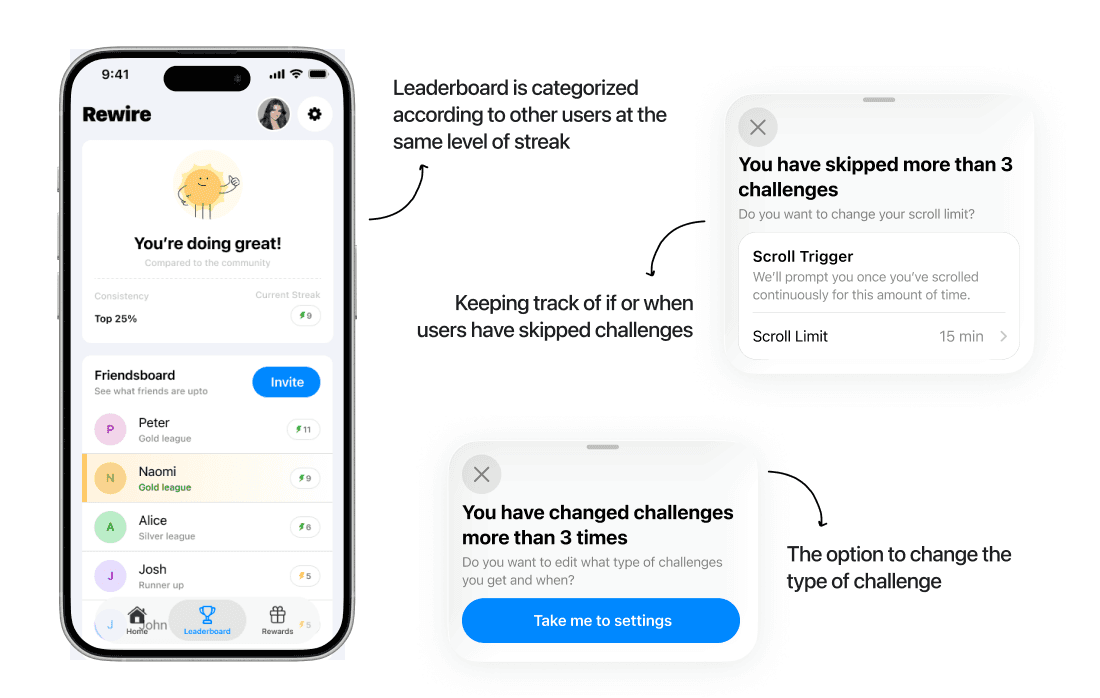
We recognized that many users might struggle to meet the goals they initially set as they are learning to form a habit and rewiring their minds, so we designed the experience to motivate progress rather than punish setbacks.
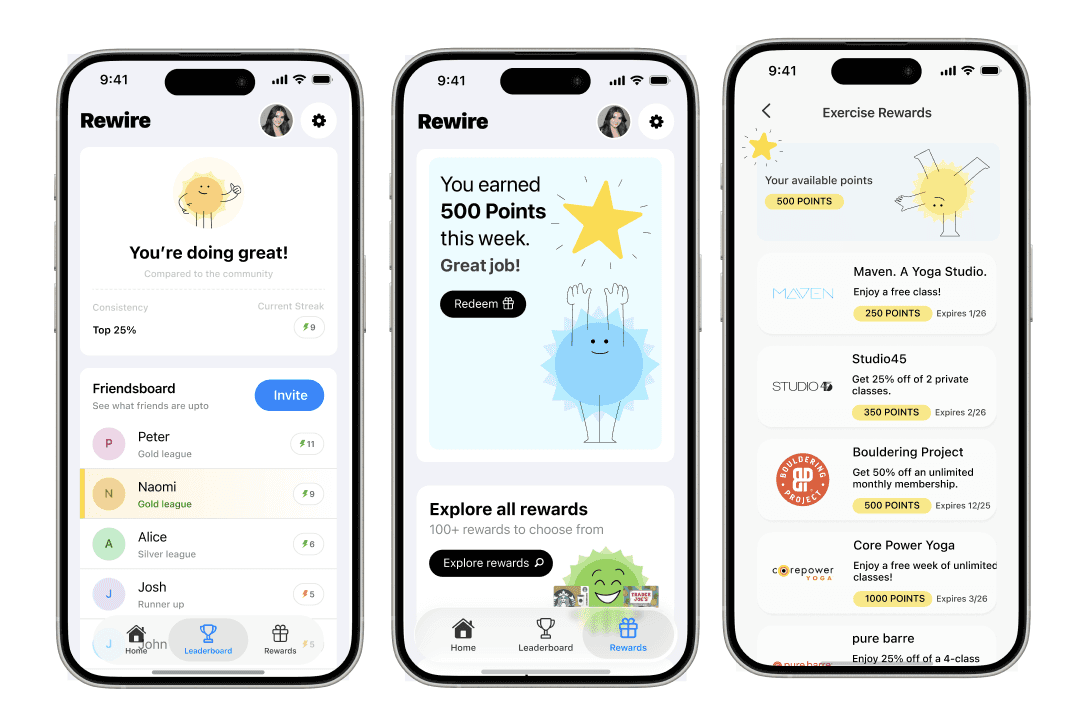
Using streaks to reward points
Using streaks to award points keeps users motivated and encourages them to stick to their scrolling goals.
View full prototype
What I learnt and contributed